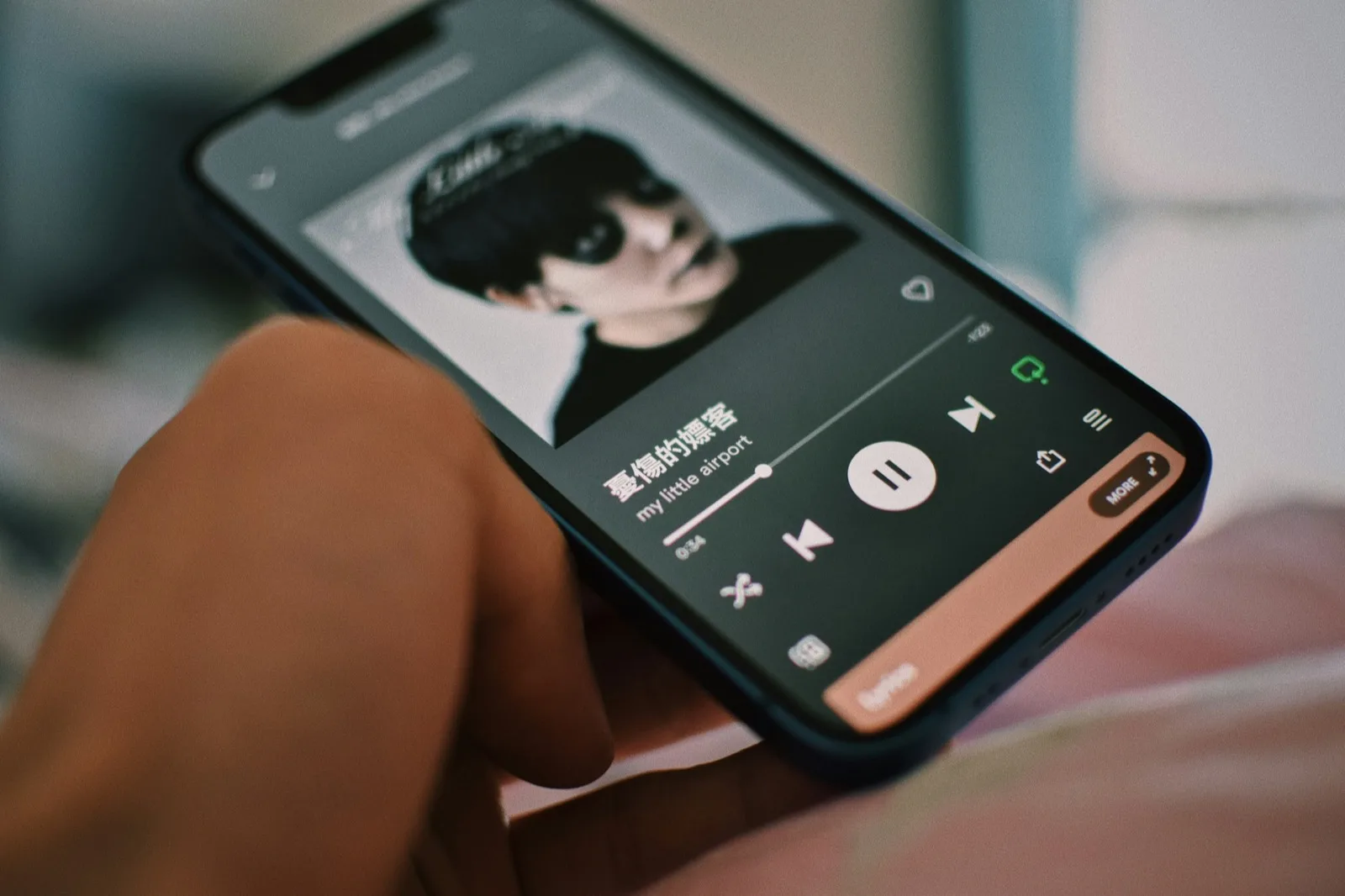
Play the song, tap the spacebar as each line starts, download a .lrc file. Works on any audio on your device, and nothing is uploaded anywhere.
What it does
An LRC file is a plain text file where each lyric line is preceded by the time it starts, like [00:12.40]. Music players read that and highlight the right line as the song plays, which is how synced lyrics work in foobar2000, VLC, Poweramp, Plex, Navidrome and most karaoke software.
Making one means deciding where each line begins, and the fastest reliable way to do that is to play the song and tap along. Load the audio, paste the lyrics one line per line, press play, and hit the spacebar at each line. If you were slightly late, the offset slider shifts everything at once; if one line is wrong, click it and redo just that one.
Everything happens in your browser. The audio is never uploaded, which matters because the files people want lyrics for are frequently their own recordings or things they would rather not hand to a website. There is no account and no limit.

How it works
One pass through the song is usually enough.
Any audio file your browser can play. Put each lyric line on its own line — that is what a line means in an LRC file.
Press space as each line starts. The cursor moves down automatically, so you can keep your eyes on the lyrics rather than the screen.
Nudge the offset if you were consistently late, click any line to redo it, then download the .lrc.
What you get
[mm:ss.xx] before each line, hundredths of a second, plain UTF-8 text. That is the format every player expects, and a file that is nearly right does not load.
One pass through the song at real speed beats scrubbing to find each line and typing a number. The spacebar is the whole interface.
A global offset for being systematically late, and click-to-select for the one line you got wrong. Retiming a single line does not disturb the others.
The song is played by your own browser and the file is written locally. No upload, no account, no cap on how many you make.
Who uses it
Drop the .lrc next to the audio file with the same name and most players pick it up automatically.
Timed lyrics plus an instrumental — which the vocal remover on this site will make for you.
Plex, Navidrome and Jellyfin all read LRC. Adding them is what makes a personal library feel finished.
Following a song line by line at the moment it is sung is a genuinely effective way to learn.
Shipping an LRC alongside a track you made is a small thing that listeners notice.
The timings are the hard part of a lyric video. Editors will import an LRC and place the text for you.
FAQ
Because automatic alignment that works on any file you have would mean uploading your audio, and the results still need correcting on anything with a dense mix, a long intro or backing vocals. Tapping once through the song takes about as long as the song does and gives you exactly the timings you wanted, on any file, without it leaving your device. It is also how the well-regarded LRC tools work.
Plain text with a timestamp in front of each line — [00:12.40]The first line. Players read the timestamps and highlight the matching line during playback. You can open one in any text editor and read it.
Most that support lyrics at all: foobar2000, VLC, Poweramp, MusicBee, AIMP, Plex, Navidrome, Jellyfin and the majority of karaoke apps. The usual convention is to put the .lrc next to the audio with the same filename.
That is the normal outcome — human reaction time is a couple of hundred milliseconds. Drag the offset slider back by about 0.2 seconds and the whole file shifts at once. Doing that once is faster than tapping more carefully.
Yes. Click that line to select it, get to the right moment in the song, and tap again. Only that line changes.
No. The song is played directly from your device and the LRC is written in the page. Nothing is transmitted, which is the point for anyone timing their own unreleased material.
Wherever you normally would, or write them yourself. This times lyrics; it does not transcribe them. If a line is unclear, slowing the track down with the speed changer usually settles it.
Not here — this produces standard line-level LRC, which is what almost every player supports. Word-level formats exist but are read by far fewer applications.
It works, but tapping is much easier with a keyboard. On a phone, use the button rather than the spacebar.
No. No account, no credits, no cap on how many files you time. It all runs in your browser.

Load a song, tap along, download the .lrc. Nothing uploaded.